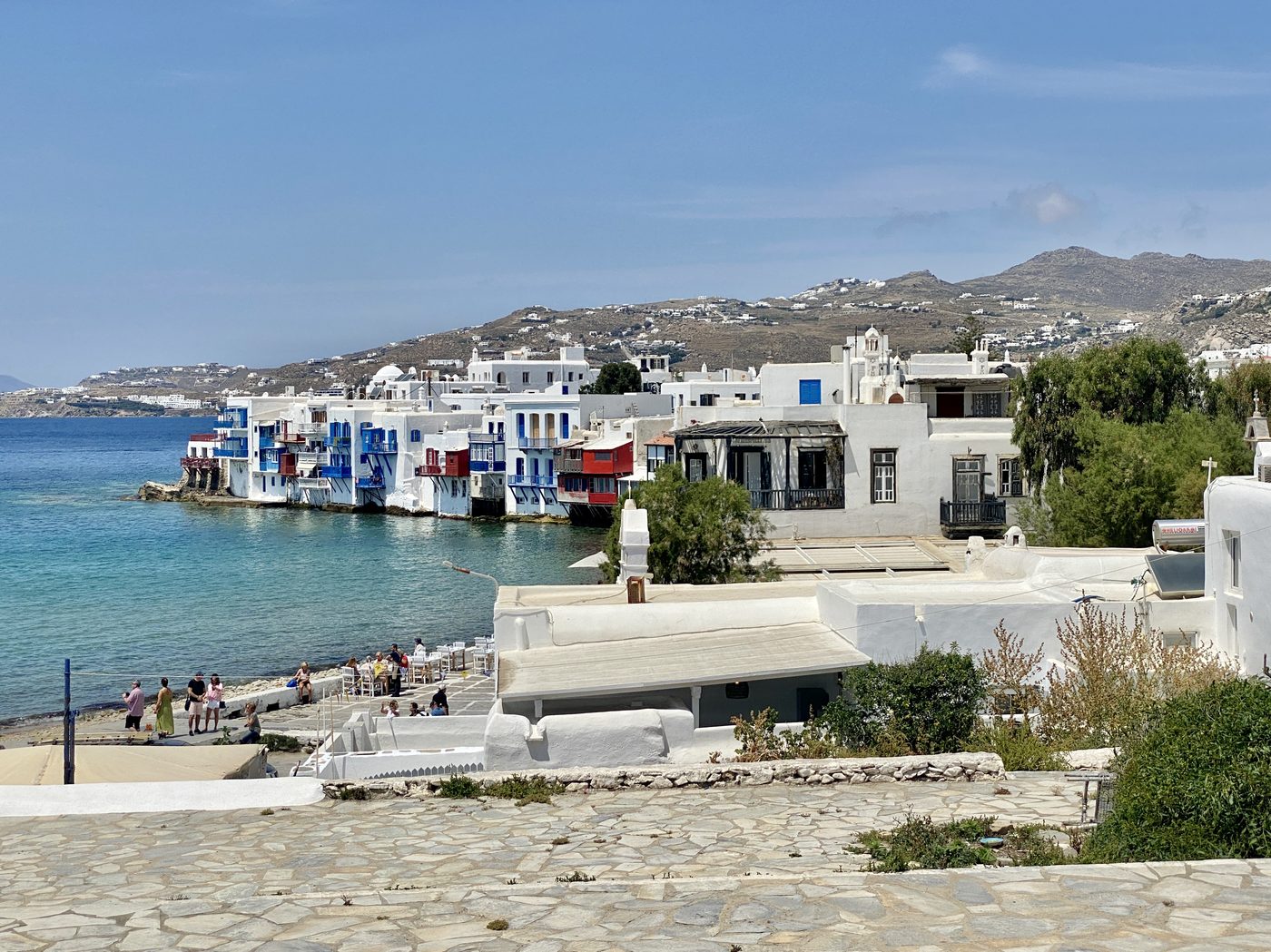
Little Venice is a row of 18th-century houses built right on the water's edge in Mykonos Town, with colourful balconies hanging over the Aegean and waves lapping at the foundations. It's free to visit, open all day and night, and the sunset from here rivals anything on the island, including the one you'd pay 150 EUR to see from a catamaran.
In this guide
If Mykonos has a single image that captures its character, it's Little Venice: whitewashed buildings splashed with colour, the sea right beneath them, and the famous windmills on the hill just behind. The area is a compact stretch of the western waterfront in Mykonos Town (Hora), and it functions as the island's social centre. By day it's cafes and galleries. By sunset it's packed with people holding drinks and cameras. By late night it's bars and music.
You don't need a tour, a ticket, or a plan. You just walk there.
Where Is It?
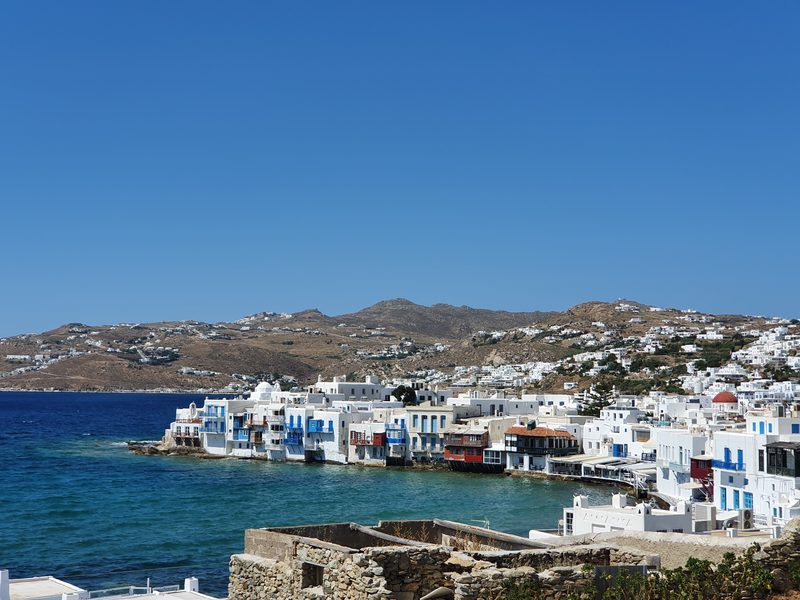
Little Venice (Mikri Venetia) sits on the western edge of Mykonos Town, about 10-15 minutes' walk from the main harbour.
| Detail | Info |
|---|---|
| Location | Western waterfront, Mykonos Town (Hora) |
| Entry fee | Free (open public area) |
| Hours | Open 24/7 (it's a neighbourhood, not a site) |
| Nearby | Windmills (Kato Mili), Paraportiani Church, Megali Ammos Beach (~300m) |
| From the main port | 10-15 minute walk through Hora's lanes |
| From the New Port | Bus or taxi to Mykonos Town, then walk |
How to find it: From the main harbour in Mykonos Town, walk into the lanes heading west. Follow signs for "Little Venice" or "Windmills", or simply ask anyone. The area is small enough that you'll stumble across it within minutes of entering the old town. When the buildings start hanging over the water, you're there.
What Will You See?
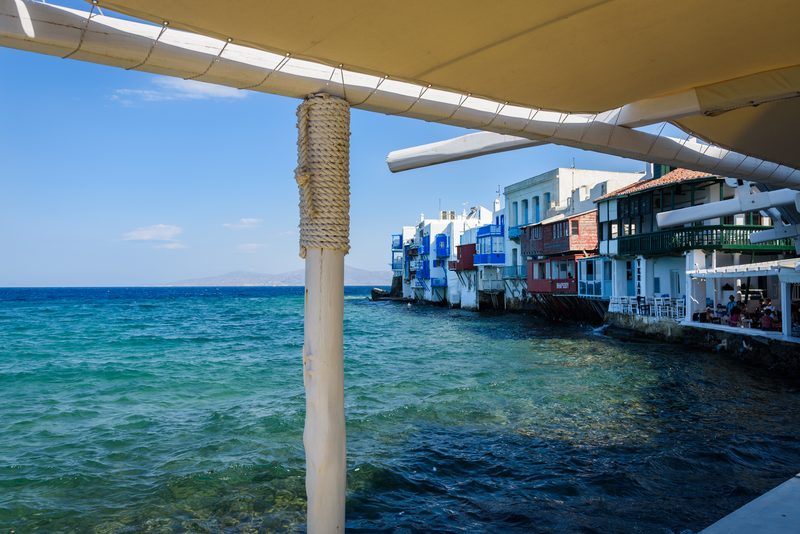
The Houses
Little Venice gets its name from the buildings that sit directly on the waterline, their wooden balconies jutting over the sea. They were originally built by wealthy ship captains in the 18th century, and the architectural similarity to Venice's Grand Canal is more atmosphere than accident: the builders were influenced by Venetian style from centuries of Cycladic trade links.
In rough weather, waves actually splash against the lower floors. In calm conditions, the water laps gently at the foundations while you sit on a balcony above with a glass of wine.
The Windmills
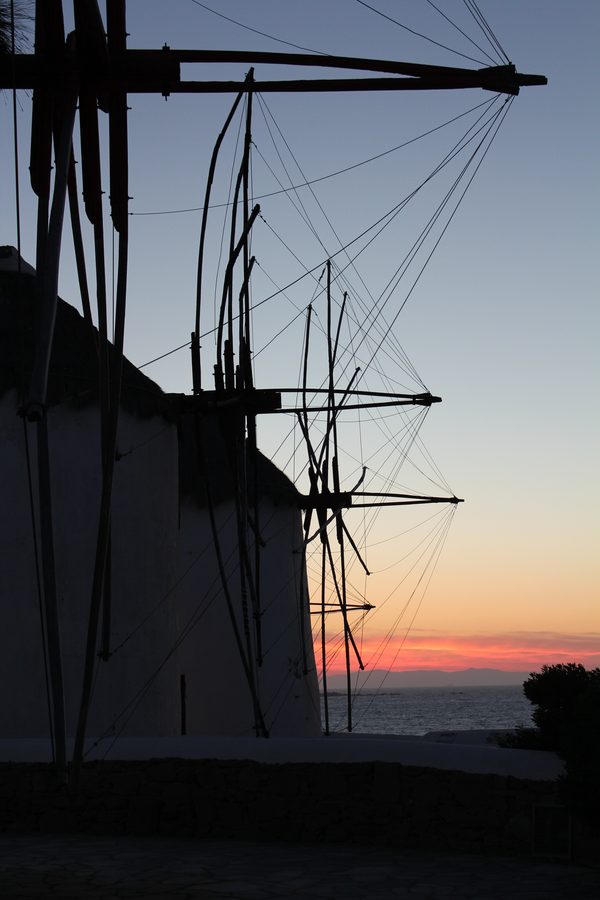
On the hill directly behind Little Venice, the Kato Mili windmills are Mykonos's most photographed landmark. The row of white, cylindrical windmills dates from the 16th century and was originally used to mill grain shipped in from nearby islands. They're no longer operational, but the silhouette against the sunset is iconic.
The best view of the windmills is from Little Venice looking east. The best view of Little Venice is from the windmills looking west. Visit both.
Paraportiani Church
A few minutes' walk from Little Venice, the Church of Panagia Paraportiani is a cluster of five whitewashed churches stacked and merged together over several centuries. It's the most photographed church in Greece (arguably the most photographed in the Cyclades, at least). The asymmetric, organic shape looks like it was sculpted from meringue.
Art Galleries and Boutiques
Little Venice has a concentration of small galleries showing Greek and international artists, plus boutiques selling jewellery, fashion, and crafts that are a step up from the souvenir shops in the main town. The quality is generally higher here. So are the prices.
The Sunset
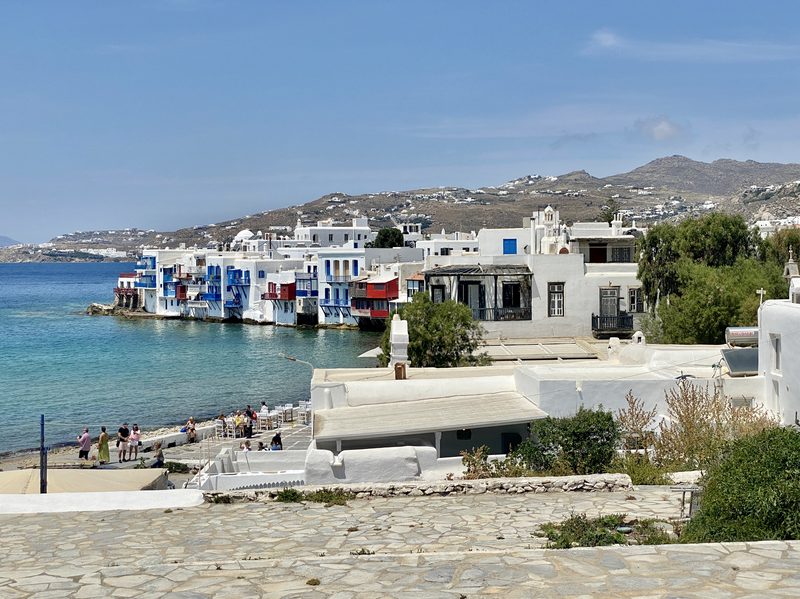
This is what most people come for. Little Venice faces west across the open Aegean, and the sunset views are spectacular. The best spots:
- Waterfront bars and cafes. The tables and seats right on the water fill up 30-60 minutes before sunset. Buy a drink (not cheap: expect 10-15 EUR for a cocktail) and you get a front-row seat.
- The promenade. Standing room along the waterfront is free but gets crowded in summer. Arrive at least 30 minutes early.
- The windmill area. Slightly elevated, slightly less crowded, and gives you a wider view that includes Little Venice in the foreground.
The sunset here is genuinely beautiful, but manage your expectations about the crowd. In July-August, Little Venice at sunset looks like a stadium. If you want solitude with your sunset, walk south along the coast toward Megali Ammos Beach instead.
Where to Eat and Drink
Little Venice is Mykonos's dining and drinking heartland. Options range from waterfront cocktail bars to proper restaurants:
For drinks and sunset: The bars along the waterfront serve cocktails, wine, and beer with the sunset view built into the price. Expect 12-18 EUR for a cocktail. The experience is the point. You're paying for the seat and the view as much as the drink.
For dinner: Several restaurants in and around Little Venice serve seafood, Greek cuisine, and Mediterranean fusion. Quality is generally good but prices are high: budget 40-60 EUR per person for dinner with wine. For better value, walk 5 minutes inland where the same quality food costs significantly less.
For late night: Little Venice transitions into a nightlife zone after dark. Bars play music, some have DJs, and the area stays lively until the early hours. It's more cocktail-bar than club, but Mykonos's club scene is a short walk away.
How to Spend Your Time
Quick Visit (1-2 hours)
- Walk through the lanes to Little Venice
- Photograph the waterfront houses and windmills
- Coffee or a drink at a waterfront cafe
- Walk up to Paraportiani Church
Half Day (3-4 hours)
- Morning: Explore the galleries and boutiques
- Lunch at a Little Venice restaurant
- Walk to the windmills and back
- Browse the back streets of Hora
Sunset Session (2-3 hours, evening)
- Arrive 45 minutes before sunset
- Secure a spot at a waterfront bar or on the promenade
- Watch the sunset
- Stay for dinner at a nearby restaurant
- Walk through the illuminated streets of Hora afterward
What Should You Know Before Going?
- Free to visit. Little Venice is a public area, not an attraction with a ticket booth. You can walk through at any time.
- The stones near the water are slippery. Especially the lower-level promenade where waves splash. Watch your step, particularly after dark.
- Crowds peak at sunset in summer. If you want a relaxed experience, visit in the morning or early afternoon when the area is much quieter.
- Bring a light jacket for evening. The waterfront gets a breeze after dark, especially outside peak summer.
- Photography is best in the golden hour. Late afternoon light on the whitewashed buildings and the water is extraordinary. Morning light is also good for the windmill side.
- The area is compact. You can see all of Little Venice in 30 minutes if you're just walking through. The point is to linger, not to power-walk it.
- It's Mykonos, so it's expensive. Drinks, food, and shopping in Little Venice are priced accordingly. A sunset cocktail is an experience, not a bargain.
When Is the Best Time to Visit?
May-June and September-October. Warm, beautiful light, manageable crowds. The sunset is just as good with half the people.
July-August. Peak everything. The atmosphere is electric but the crowds are intense, especially at sunset.
Morning (any season). Little Venice is nearly empty before 11:00. The light is clean, the water is calm, and you can photograph without people in every frame.
Little Venice is on the western waterfront of Mykonos Town. Free to visit. The sunset is the main event. Arrive 30-60 minutes early for a spot. The windmills and Paraportiani Church are within a 5-minute walk.
Planning more adventures on the island? Browse our complete guide to the best day trips from Mykonos.
Last updated: